Amazon Robotics in Fulfillment Centers: How Warehouse Automation Is Changing Logistics
Trutz Fries

In July 2025, Amazon put its one millionth robot into operation at a fulfillment center in Japan, a milestone in the company’s history. Today, around 75% of all deliveries worldwide are supported by robots in some form. The shift began in 2012 with Amazon’s acquisition of Kiva Systems.
Behind that efficiency, however, lies a more complex reality. While Amazon’s robot fleet has grown rapidly, its workforce fell from 1.6 million employees in 2021 to 1.5 million in 2024. External studies have also reported higher injury rates in automated warehouses than the industry average.
This suggests that automation may replace physical labor while also increasing performance pressure.
The Evolution of Amazon Robotics: From Kiva to One Million Robots
The history of Amazon Robotics began in March 2012, when Amazon acquired Kiva Systems for $775 million. At the time, it was the second-largest acquisition in Amazon’s history. That decision laid the foundation for a broad automation strategy.
The numbers show the pace of change. Amazon’s fleet grew from 200,000 robots in 2019 to 520,000 in 2022, then reached the one-million mark in July 2025. More than 300 fulfillment centers worldwide are equipped with robotic systems.
The human workforce developed differently over the same period. After peaking at 1.6 million employees in 2021, it declined to about 1.5 million in 2024. The robot fleet is therefore growing faster than the human workforce, a trend that has reignited the debate about automation and jobs.
The Kiva Acquisition as a Turning Point
Kiva Systems developed a system in which mobile robots bring entire shelves to employees instead of requiring people to walk through warehouse aisles. According to Amazon, productivity increased from about 100 to 300-400 packed products per hour.
After the acquisition, Amazon withdrew the technology from the market and used it exclusively. That gave the company a clear competitive advantage, while forcing other providers to develop their own solutions.
The 9 Robot Types in Amazon’s Ecosystem
Amazon’s robotics strategy is based on nine specialized systems, each designed for specific tasks in the fulfillment process.
Mobile Transport Robots: Hercules and Titan
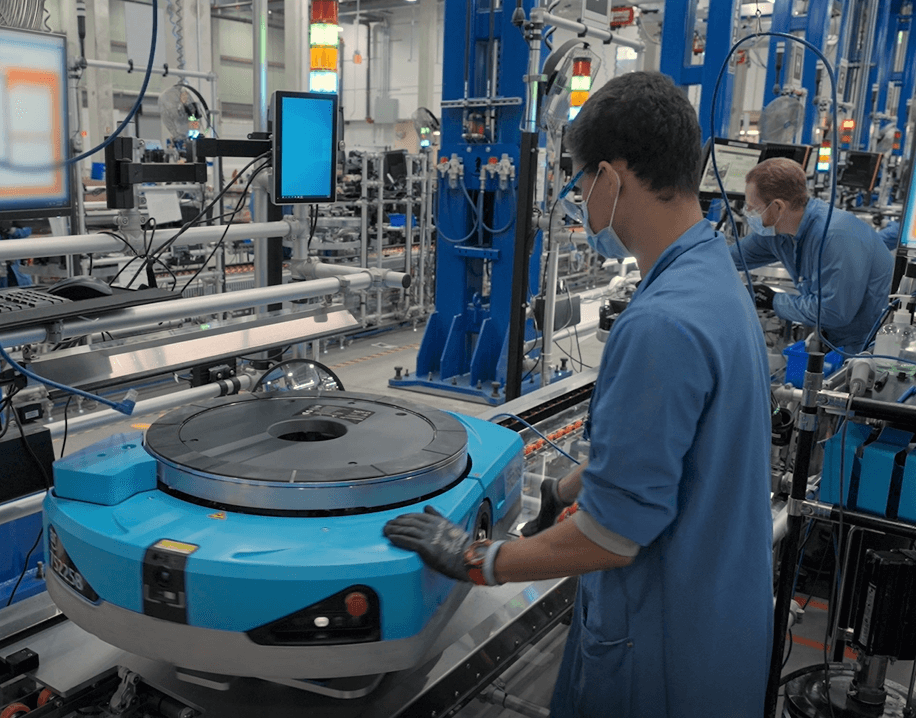
Hercules forms the backbone of Amazon’s robot fleet. These compact units drive underneath storage pods, lift them, and transport them to picking stations. Equipped with a forward-facing 3D camera, Hercules navigates precisely through the warehouse by reading floor markers. The robots operate in dedicated areas that are closed to people.
Titan performs similar tasks but offers twice the carrying capacity of Hercules. This robot was developed for heavy products such as household appliances, furniture, or grocery pallets. Titan uses computer vision technology for navigation and can maneuver in restricted areas as well.
Autonomous Navigation: Proteus
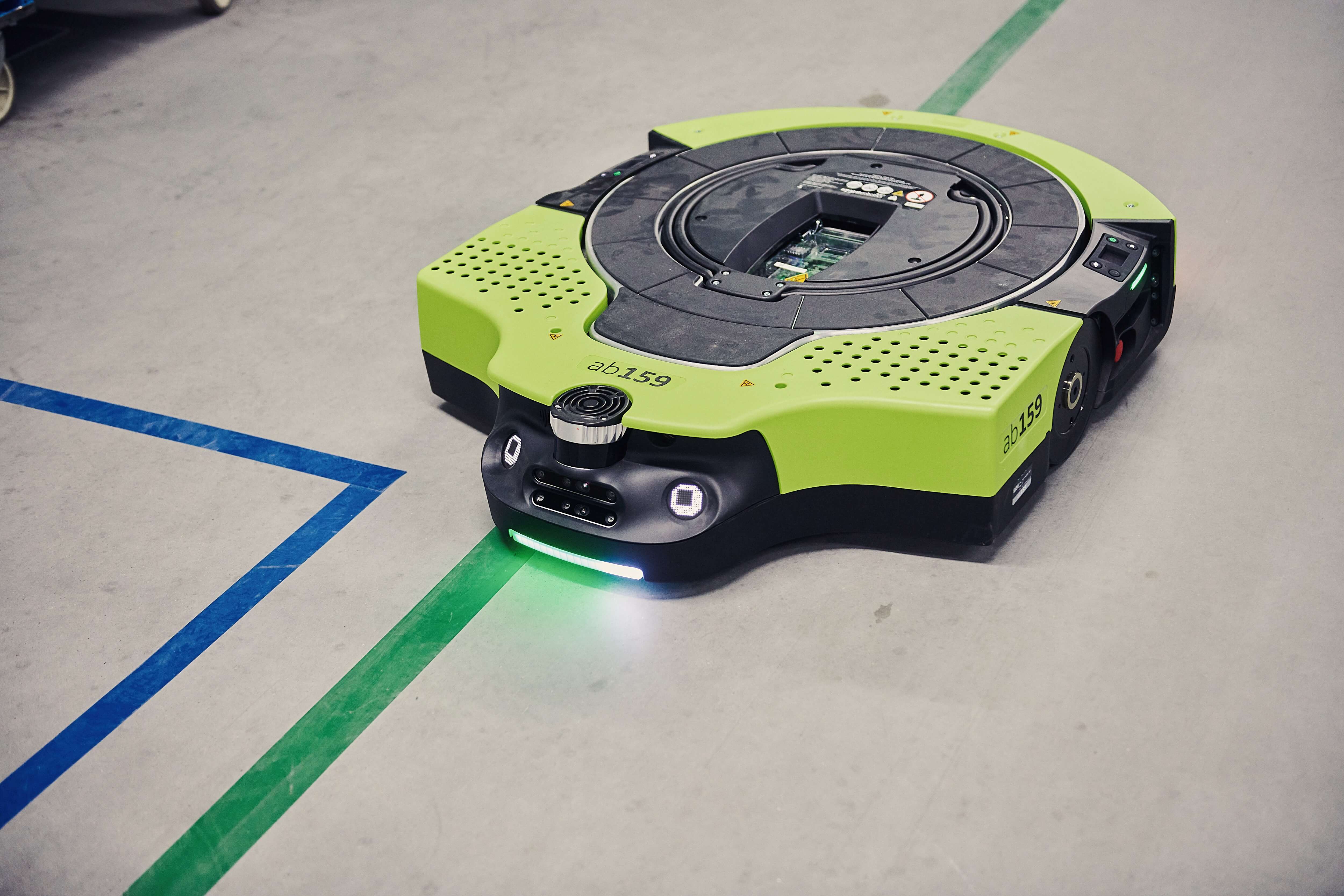
Proteus differs from earlier models through its autonomous navigation. As Amazon’s first fully autonomous mobile robot, Proteus does not depend on floor markers. Instead, it uses a sensor system for obstacle avoidance.
Unlike Hercules and Titan, which operate in separated areas, Proteus can move through mixed zones where people are also working. It transports loaded carts from the outbound dock zone to the loading area, where packages are loaded onto trucks. Proteus works together with Cardinal, a robotic arm that loads the carts.
Robotic Arms for Precision Work
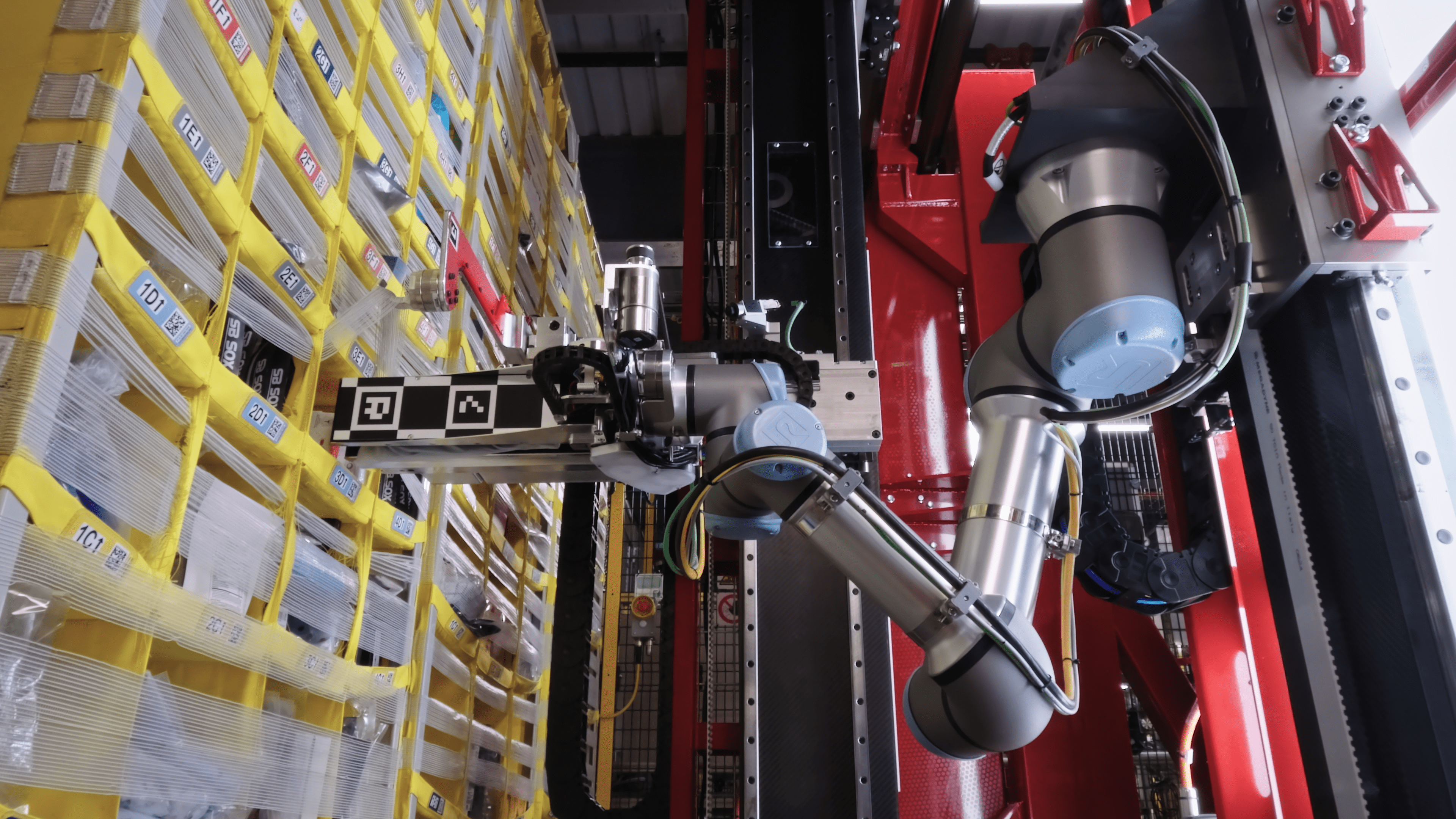
Amazon’s four robotic arm systems represent different stages of manipulation technology.
Robin was the first robotic arm developed by Amazon Robotics. Its main task is to take packages from conveyor belts and sort them onto mobile transport units. Robin also performs quality checks and identifies damaged items that need to be removed from the process.
Cardinal is equipped with AI and computer vision. It can select packages from chutes, read labels, and assign packages to the correct transport carts. The system processes packages weighing up to 23 kilograms.
Sparrow was developed to handle individual products. Equipped with computer vision and AI, Sparrow can, according to Amazon, identify and handle more than 200 million different products of varying shapes, sizes, and weights. The robot picks individual items from bins and sorts them into shipping totes.
Vulcan is Amazon’s newest robotic arm. As the first Amazon robot with tactile sensing, Vulcan can not only see but also “feel.” The system dynamically adjusts its grip force to the product, gentle for fragile items and firmer for robust objects.
The Sequoia System: Integration at a New Level
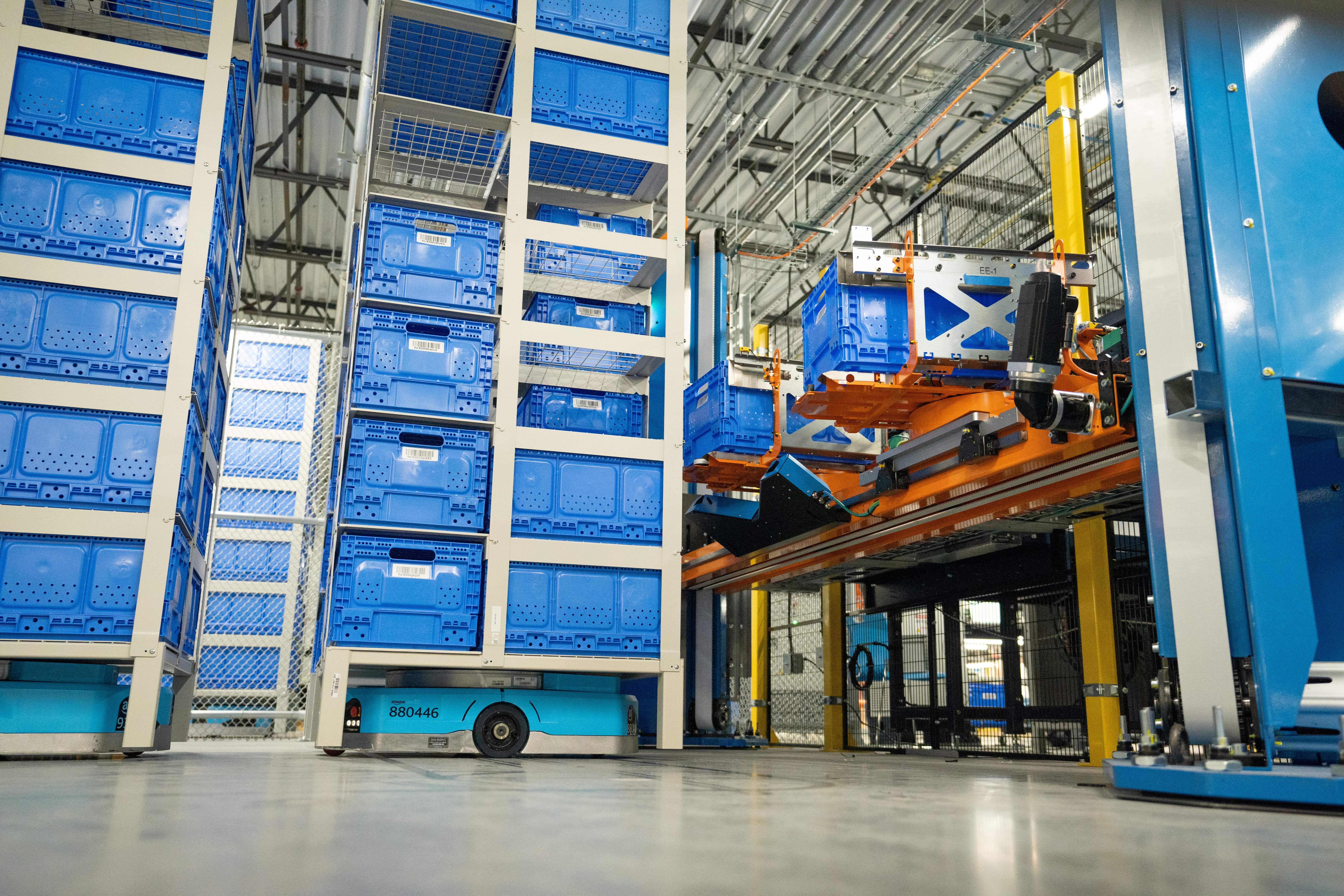
Sequoia is not a single robot. It is a complex, multi-level logistics system that integrates several robotics technologies. The system combines mobile robots, gantry systems, robotic arms, and ergonomic workstations into one connected unit.
According to Amazon, a Sequoia system can store more than 30 million items, five times more than earlier implementations. Containers are automatically transported by mobile robots to different levels, where robotic arms pick and consolidate products. The entire system is coordinated by AI.
Amazon says Sequoia identifies and stores items 75% faster than traditional systems and reduces order processing time by 25%. Items are presented at workstations positioned between mid-thigh and mid-chest height, which is intended to reduce physical strain on employees.
Packaging Automation
Amazon’s packaging robots produce custom-fit paper bags. Sensors measure the product to be packed, and the machine creates a perfectly sized package from recycled paper. The bag is sealed using heat sealing.
According to Amazon, this technology saves more than 130 million plastic bags each year. Since 2015, the company says it has reduced average packaging weight per shipment by 43%.
Next-Generation Fulfillment Centers
At the fulfillment center in Shreveport, Louisiana, Amazon uses its most comprehensive automation setup. The facility covers more than 270,000 square meters across five floors. At full capacity, 2,500 employees work there alongside ten times more robots than in conventional facilities.
Technical Specifications
At the center is the largest Sequoia system Amazon has ever installed. With capacity for 30 million items, it coordinates thousands of mobile robots and robotic arms. The complexity of this coordination requires advanced AI systems that set priorities, optimize routes, and avoid bottlenecks in real time.
All nine robot types work together here: Hercules and Titan move storage pods, Proteus transports carts, Robin, Cardinal, Sparrow, and Vulcan handle products, Sequoia orchestrates the overall process, and packaging automation creates optimized shipping packaging.
AI Integration and DeepFleet
Amazon developed the DeepFleet model with Amazon SageMaker to coordinate the robot fleet. The model uses data from Amazon’s warehouses and inventory systems to optimize route planning and workflows.
According to Amazon, DeepFleet increases the speed of the robot fleet by 10%. The system continuously learns from operational data and adapts its strategies to changing conditions.
Efficiency Gains
According to Amazon, order processing time in next-generation fulfillment centers falls by 25%, while shipping accuracy improves. During peak periods such as Prime Day or the holiday season, the cost-to-serve metric, meaning the cost per delivered order, improves by 25%.
These efficiency gains make it possible to expand same-day and next-day delivery, while also increasing pressure on competitors to offer similar delivery speeds.
Impact on Employees: Relief and Concern
The automation of Amazon warehouses has sparked intense debate about the future of work. While the company emphasizes safety improvements and new career opportunities, critics warn of rising productivity demands and job losses. According to internal documents, Amazon plans to automate up to 75% of its global warehouse processes. That would mean a reduction of more than 600,000 potential new hires in the United States by 2033.
Once Amazon can make this process economically profitable, the model will find imitators, warns Daron Acemoglu, MIT professor and Nobel laureate.
Amazon’s Position: Safety and Ergonomics
Amazon regularly publishes safety data intended to show improvements. The Recordable Incident Rate (RIR), injuries that require more than first aid, improved by 34% over five years. The Lost Time Incident Rate (LTIR), injuries that lead to missed work time, fell by 65% over the same period.
The company attributes this development partly to robotics. By taking over heavy lifting and repetitive tasks, robots reduce the physical strain on employees. The ergonomic workstations where Sequoia presents products are designed to reduce the risk of musculoskeletal disorders.
In 2024, Amazon conducted 7.8 million safety inspections, 24% more than in the previous year. These inspections covered 331 sites worldwide and are intended to ensure that safety standards are met.
Critical Perspectives
External analyses paint a more nuanced picture. A 2022 report by the Strategic Organizing Center (SOC), an organization close to labor unions, found that Amazon recorded 6.6 serious injuries per 100 employees, compared with 3.2 serious injuries per 100 employees in non-Amazon warehouses.
Earlier SOC reports also found higher injury rates in automated Amazon warehouses compared with non-automated facilities. The explanation: while robots can take over heavy physical work, they also lead to higher productivity targets. Employees have to work faster, which creates new strains.
The decline in the total workforce from 1.6 million to 1.5 million between 2021 and 2024, a decrease of 100,000 jobs, fuels concerns about long-term job losses through automation.
New Job Profiles and Qualifications
Amazon stresses that robotics creates new jobs. Next-generation fulfillment centers need 30% more staff in maintenance, reliability, and engineering. In total, Amazon says automation has created 700 new job categories.
The company offers mechatronics apprenticeships for robot maintenance and programming. According to Amazon, these positions pay up to 40% more than entry-level roles. In addition, the Career Choice program supports employees in acquiring technical qualifications. Whether these new roles offset job reductions remains open.
Work in Amazon warehouses is shifting from physical to technical tasks. This requires reskilling and continuing education, a challenge for employees without a technical background.
Amazon’s Investment Strategy
Amazon is driving its robotics expansion with major investments. At the center is the Amazon Industrial Innovation Fund, a venture capital program with a volume of $1 billion.
The Industrial Innovation Fund
The fund invests in technology companies that advance innovation in robotics, AI, autonomous vehicles, and the last mile of logistics. According to Franziska Bossart, head of the fund, the focus is on generative AI.
In addition to capital, Amazon provides access to infrastructure, expertise, and its customer base, an advantage that goes beyond pure financing. Focus areas include machine learning, autonomous delivery vehicles, and technologies for last-mile logistics, the most cost-intensive part of the supply chain.
Additional Warehouse Investments
Beyond the fund, Amazon is planning investments of around $25 billion in new robotics-supported warehouses and the modernization of existing facilities. The goal is to roll out the technologies tested in Shreveport across the network.
A central advantage of Amazon’s robotic systems is their modularity. They are designed to integrate into existing sites. This allows Amazon to modernize step by step without building entirely new facilities.
Competitive Position Through Robotics
Amazon’s automation strategy gives the company clear advantages over traditional logistics providers and e-commerce competitors.
Comparison with UPS, FedEx, and DHL
UPS, FedEx, and DHL are also investing in automation. But Amazon has proprietary logistics software that controls the entire process from warehouse to doorstep. This integration enables tight coordination between ships, aircraft, warehouses, and vehicles in the network.
According to industry reports, Amazon Shipping offers prices around 30% below the base rates of FedEx or UPS, partly through robotics-based efficiency gains.
Amazon also focused early on residential delivery, a complex but high-growth market segment, while traditional providers were mainly oriented toward B2B.
Competitor Responses
Competitors are responding:
- UPS is building its “Network of the Future.”
- FedEx is strengthening its e-commerce capabilities.
- DHL is automating sorting centers.
All of them are increasingly relying on AI, machine learning, and robotics.
Amazon’s lead from the 2012 Kiva acquisition remains decisive. The combination of scale, with more than 1 million robots, global density, with more than 300 automated sites, and software integration creates a competitive barrier that will be difficult to catch up with for years.
Sustainability Through Robotics
Amazon emphasizes that robotics promotes not only efficiency but also sustainability.
Packaging Reduction Through Automation
Since 2015, Amazon has reduced the average packaging weight per shipment by 43%. Over the past five years, AI applications have led to an additional 33% reduction in packaging requirements.
Packaging robots create custom-fit paper packaging, avoid oversized parcels, and reduce filler material. All plastic air pillows have been replaced globally by recyclable paper solutions.
The Universal Robotic Labeller enables direct labeling of robust products. Many items can be shipped without additional packaging, which saves material.
Investments in Recycling Robotics
Through the Innovation Fund, Amazon also invests in companies with a sustainability focus. One example is Glacier, a start-up for AI-powered recycling robots.
These robots identify and sort more than 30 material categories in real time, improving recycling rates. The data they generate helps Amazon better understand the life cycle of packaging, contributing to Amazon’s goal of becoming carbon-neutral by 2040.
The Future of Warehouse Automation
Amazon’s developments show where the logistics industry is heading.
Technology Trends
The integration of generative AI is still at an early stage. DeepFleet is only the first step. Future systems will likely take over more complex tasks, from inventory planning to predictive maintenance.
Computer vision will become more precise and faster. New generations of Sparrow and Vulcan could soon handle almost the entire product catalog. Tactile sensing will also become standard, because it allows robots to recognize material properties and respond accordingly.
Collaboration between humans and machines will become closer. Hybrid work zones, where systems like Proteus can operate safely alongside people, will become the norm.
Implications for E-Commerce Sellers
For Amazon sellers, several consequences follow:
- Delivery speed will become a decisive factor.
- FBA provides access to Amazon’s automated infrastructure, a clear competitive advantage.
- Product packaging should be optimized for robotic handling.
- Sellers automatically benefit from Amazon’s sustainability initiatives.
Industry-Wide Transformation
Amazon is setting the industry standard. What seems exclusive today will become accessible to mid-sized logistics providers in a few years.
The cost of automation is falling, while reliability and performance are increasing. As a result, automated solutions will also become economically viable for smaller businesses.
The role of employees is changing. Technical skills are becoming more important, while manual tasks are declining. Reskilling and continuing education will become a core responsibility for the industry.
In e-commerce, fulfillment excellence will increasingly determine success. Companies that deliver quickly, accurately, and cost-efficiently secure a competitive advantage.
Conclusion
With more than 1 million robots, Amazon is defining the standard for modern warehouse automation. The combination of nine specialized robot types, AI integration, and billions in investment creates a level of efficiency that traditional logistics can hardly match.
The consequences for employees remain controversial. While Amazon emphasizes new opportunities and improved safety, critics warn about productivity pressure and job losses.
For sellers and logistics professionals, one thing is clear: robotics is now reality. It shapes delivery speed, cost structures, and customer expectations, and it is changing the entire industry for the long term.
FAQ
How many robots does Amazon have in its fulfillment centers?
Amazon reached the milestone of 1 million robots in July 2025, deployed across more than 300 fulfillment centers worldwide. According to the company, 75% of all Amazon deliveries are now supported by robots in some form. The fleet grew from 200,000 robots in 2019 to 520,000 in 2022 and then to the current million.
Which robot types does Amazon use?
Amazon uses nine different robot types: Hercules and Titan, mobile transport robots for storage pods; Proteus, a fully autonomous mobile robot; Robin, Cardinal, Sparrow, and Vulcan, specialized robotic arms; the Sequoia system, an integrated multi-level solution; and packaging automation. Each type is optimized for specific tasks, but they work together in one coordinated system.
Are robots replacing human jobs?
Amazon’s total workforce fell from 1.6 million in 2021 to 1.5 million in 2024, while the robot fleet grew exponentially, a decline of 100,000 jobs. Amazon points to 700 new job categories and says next-generation facilities require 30% more employees in technical roles such as maintenance and engineering. Work is shifting from physical to technical tasks, which requires reskilling. The company does not state whether the new roles numerically offset the jobs that disappear.
How do robots improve workplace safety?
Amazon reports a 34% improvement in the Recordable Incident Rate and a 65% improvement in the Lost Time Incident Rate over five years. Robots take over heavy lifting and repetitive tasks, while ergonomic workstations reduce strain. Critics, however, point to external studies showing higher injury rates in Amazon warehouses compared with the industry, possibly due to higher productivity requirements.
What is the Sequoia system?
Sequoia is Amazon’s integrated, multi-level robotics system that coordinates mobile robots, gantry systems, and robotic arms. According to Amazon, it can store more than 30 million items, identifies and stores products 75% faster than traditional systems, and reduces order processing time by 25%. The system presents items at workstations positioned between mid-thigh and chest height.
How much does Amazon invest in robotics?
Amazon operates a $1 billion Industrial Innovation Fund for investments in robotics, AI, and autonomous vehicles. In addition, around $25 billion is projected for new robotics-supported warehouses and the modernization of existing facilities.
What is DeepFleet?
DeepFleet is Amazon’s generative AI model for optimizing robot coordination in warehouses. It was developed with Amazon SageMaker and trained on warehouse and inventory data. According to Amazon, DeepFleet increases robot fleet speed by 10% through more efficient route planning and continuous learning from operational data.
Does robotics contribute to sustainability?
According to Amazon, the company has achieved a 43% reduction in packaging weight since 2015 and a 33% reduction in packaging requirements through AI over the past five years. Packaging robots create custom-fit paper packaging and avoid more than 130 million plastic bags each year. Amazon has eliminated plastic air pillows globally and invests in recycling robotics companies such as Glacier.
Do other logistics companies use similar robotics?
UPS, FedEx, and DHL are also investing in automation, sorting robotics, and AI. Amazon has a lead thanks to its early Kiva acquisition in 2012, proprietary software infrastructure, and sheer scale, with more than 1 million robots. Amazon Shipping reportedly offers costs 30% lower than the base rates of FedEx and UPS, partly because of robotics efficiency. Competitors are catching up, but the gap remains substantial.
What impact does robotics have on FBA sellers?
FBA sellers benefit from faster delivery times, including same-day and next-day delivery, higher shipping accuracy, and expanded capacity through robotics. At the same time, customer expectations for delivery speed are rising. Products should be packaged in a way that is compatible with robotic handling. FBA gives smaller sellers access to automation technologies they could not finance individually.
Subscribe to Newsletter
Get the latest Amazon tips and updates delivered to your inbox.
By subscribing you agree to our Privacy Policy .